Following the IFLA 2015 World Council meeting in Moscow, I attended the 52nd World Congress in St Petersburg (previously known as Leningrad). St Petersburg is a city known for its garden and park history and is packed full of public parks and gardens.
The city has undergone major restoration and renovation recently, with a new pedestrian street 'the big stables' as above being put in place. A nice notion with the centre of the street being set aside for casual strolling the length of the street (with seating and park-like setting) with focused retailers on the footpaths adjacent to shops in more traditional way.
The city has put in place a colour theme which guides the painting of heritage facades. The palette is based on the shadows of light that play on the water of the many canals and rivers with watery pastel hues.
Many manors and palaces line the rivers of the city - this one famous for being the home of famous Russian poet Derzhavin.
The home and garden have been fully restored based on extensive original architectural plans and drawings. Interestingly, most of the parks and gardens were designed by architects - I like to think these men (as they were mostly men - albeit often comissioned by women) were closet landscape architects!
Like much of St Petersburg it was either English picturesque gardens or French formality that influenced the garden styles of the rich and famous.
It was spring in St Petersburg and a main feature of the city are the extensive plantings of lilac. These plants with their short-lived colour and scent provide an intense sensory and visual experience that intensifies the delight spring brings to a city of people who have come out of a long and dark winter. Lilac makes sense in St Petersburg.
Manor of Dezhavin with small water feature ponds and bridges.
The garden came after the house and with the second wife of Derzhavin, who was desperate for a garden and was a talented botanical artist.
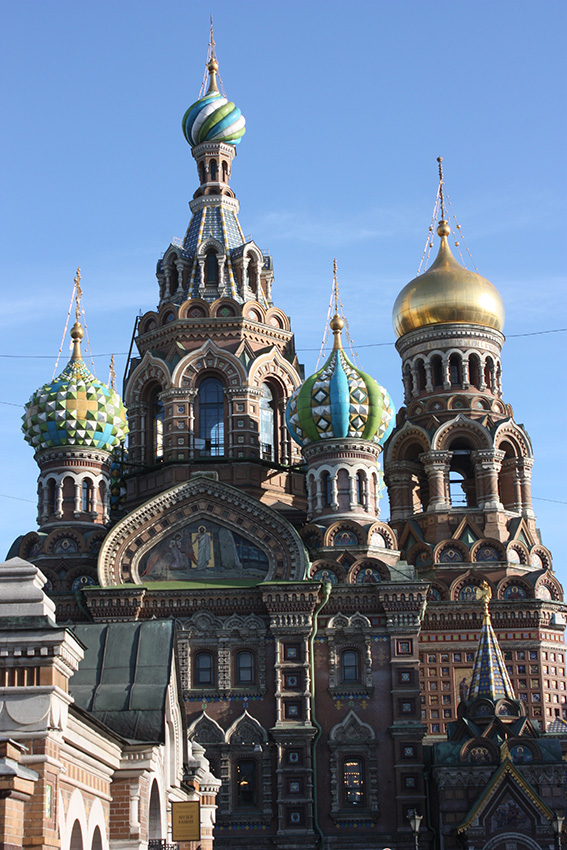
And the buildings in St Petersburg are phenomenal - highly decorative and dripping with stone carving and plaster detailing, I had to restrain myself with the photos...
Restoration of the city has included re-planting some of the original formal specimen trees. A major challenge however is that the salt used to melt snow off the streets in winter gets into the tree pits and often kills the trees.
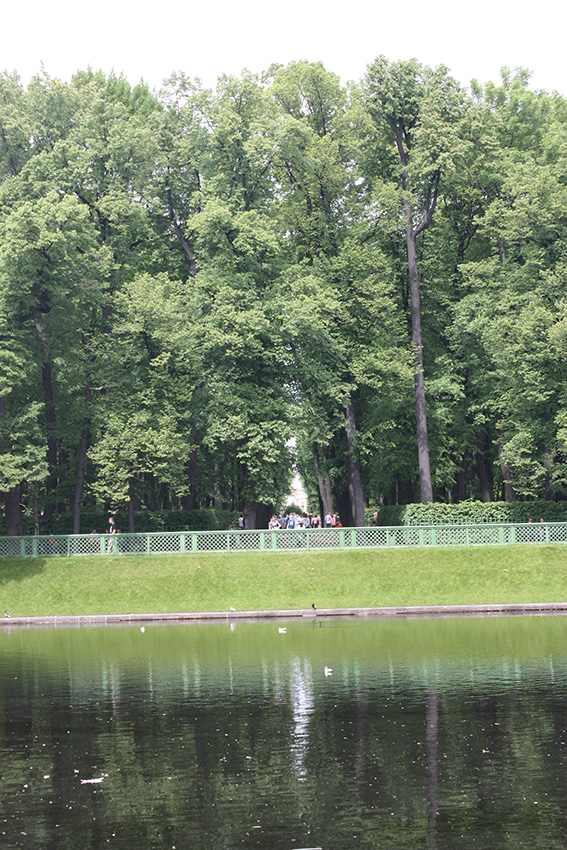
The Summer Garden is in the Dutch formal style of the 18th century that
was put in place by Peter the Great (and recently restored to its
original plan by the city). The Summer garden was the first garden
created in the city. Above to the left is the Field of Mars garden and to the right is the Summer garden.
The garden sits opposite the palace (where the IFLA gala dinner was held).
The palace was as impressive inside as it was out and was a spectacular setting for a celebration of Russian cuisine and landscapes.
My only regret was not being able to see St Petersburg in winter as I believe the beauty of the buildings and structure of the city itself would be intensified in the starkness of crisp white drapery.